AI phone answering for restaurants: what it actually costs
The short answer
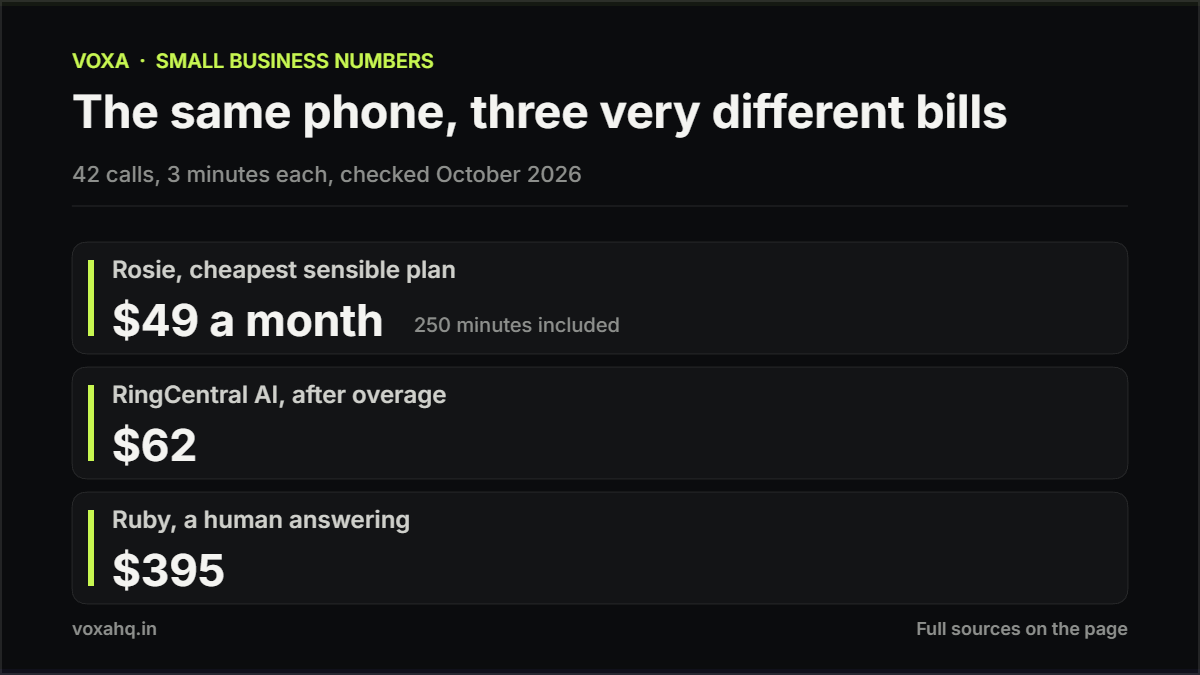
Entry plans start at $29 a month, plans that cover a real dinner service run $99 to $299, and the cheapest plan we would put a restaurant on is Rosie at $49 a month.
Why restaurants look at this first
A restaurant misses calls during exactly the two hours it cannot afford to: lunch and dinner service. Every missed call is a table, a takeaway order or a booking for a larger group. Hiring a person to answer the phone for four hours a day costs more per month than most of these systems, which is why this is one of the few AI categories where a small restaurant can see the payback immediately.
What it costs
| What you are buying | Monthly | What to watch |
|---|---|---|
| Entry plan, about 60 minutes of calls | from $29per month | Enough for a very quiet line, not for a Friday |
| Plan that covers a busy service | $99-$299per month | Check the minute allowance before the overage rate |
| The cheapest plan we would actually use | $49Rosie, per month | Flat-ish pricing, so a busy night does not surprise you |
| Overage | varies | Billed per minute or per call; the rates we recorded sit between a quarter and half a dollar |
| Setup | one-off on some vendors | Ask before you commit, it is rarely on the pricing page |
The trap is not the headline price, it is how the vendor bills a busy month. Some charge per minute, some per call, some per included-minute block and then per minute again. The same restaurant gets a different bill from each.
The 42-call test
Take a normal small restaurant: 42 calls a month, average three minutes each. Priced across the vendors we checked, the same month came out five different ways depending on whether the plan counted minutes, calls, or conversations. Before you choose, ask each vendor one question: what does a 42-call month cost me, all in, including overage?
If you want the vendor-by-vendor maths without the restaurant framing, that is in our main guide: AI phone answering cost.
What AI handles well in a restaurant
- Opening hours, address and parking questions, which are most of the calls
- Booking requests, if the system is connected to your booking tool
- Takeaway orders with a fixed menu
- Answering the third call at 8:40pm when nobody can pick up
What it still gets wrong
- Allergen questions. This is a safety issue, not a convenience one. Route those to a human.
- Changes to a booking for twelve people, which need a decision, not a script.
- Noisy lines. Background music and a caller in a car break transcription more often than the demos suggest.
- Regulars. The system does not know that table 4 always wants the same wine.
Five questions to ask before signing
- Does it write into my booking system, or does it only take a message?
- How do you bill a call that gets transferred to a human?
- What is the per-minute rate after the included allowance?
- Is there a setup fee, and is there a minimum term?
- Can I export the call recordings and transcripts if I leave?
When to skip it
If you take fewer than ten calls a month, or your restaurant sells on being answered by a person who knows the regulars, an AI line will cost more than it returns. This is a tool for volume, not for hospitality.
Questions people ask
How much does an AI phone answering system cost for a restaurant?
Entry plans start at $29 a month for around 60 minutes of calls. Plans that cover a real service run $99 to $299. The cheapest plan we would put a restaurant on is Rosie at $49 a month.
Can it take table bookings?
Yes, if it is connected to your booking system. Without that integration it can only take a message, which means someone still calls the customer back.
What does it get wrong?
Allergen and off-menu questions, large group changes, and anything said over background noise. Expect transfers to a human for those, and check how a transferred call is billed.